Horse Tunnel Market Camden London: History and Visitor Information
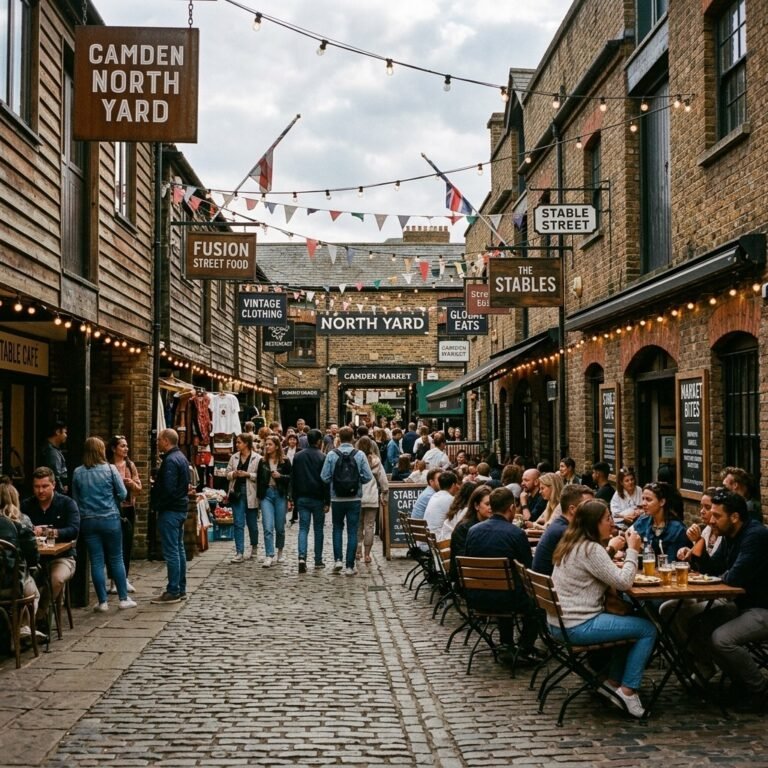
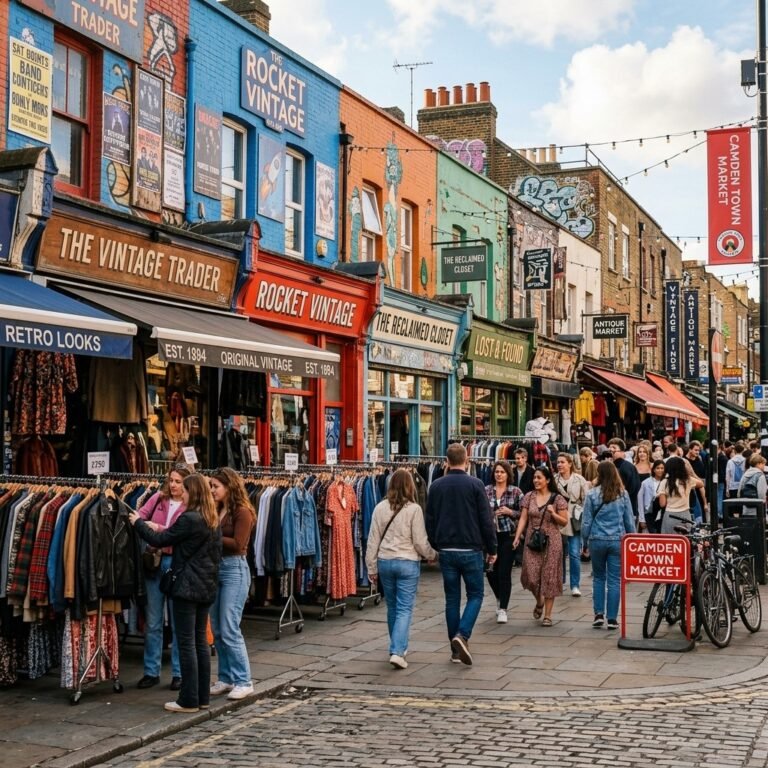
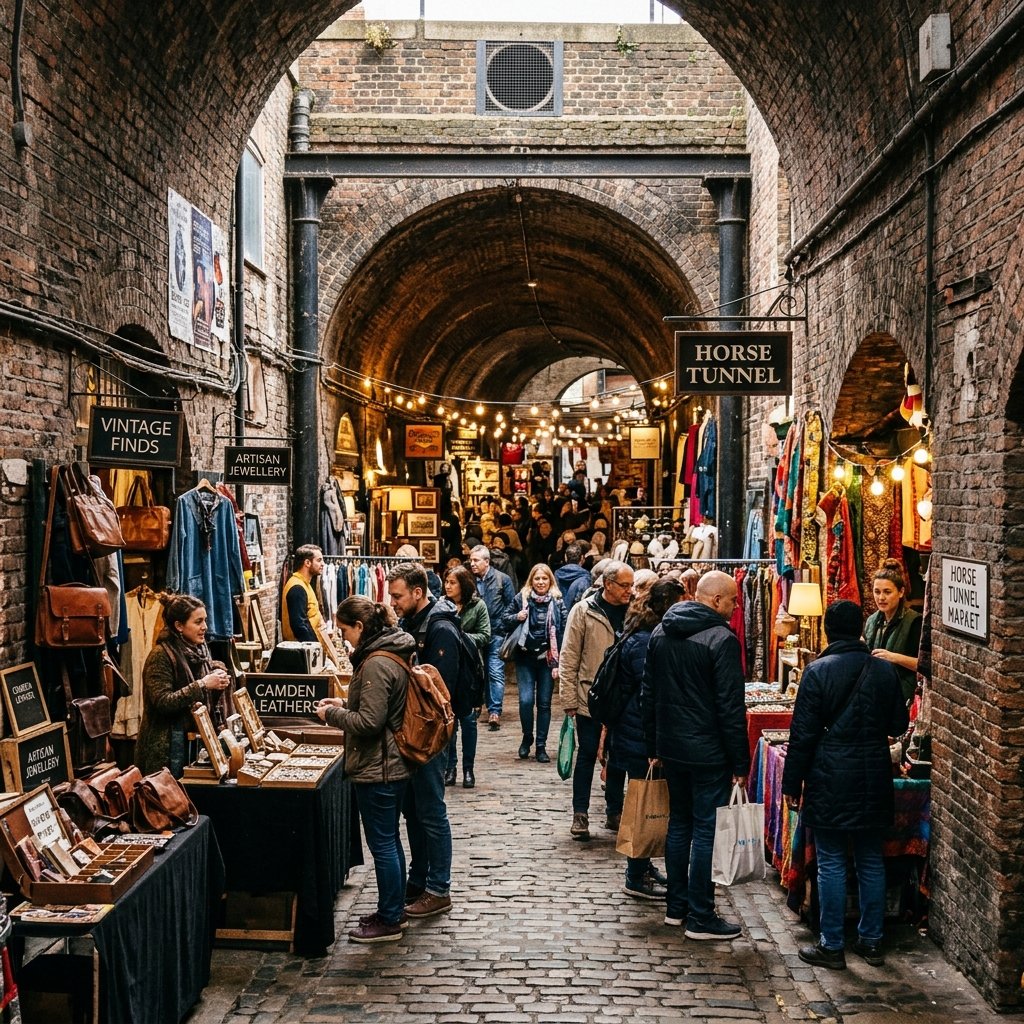
The Horse Tunnel Market is a covered section of Camden’s Stables Market, housed inside Victorian brick tunnels originally built between 1854 and 1856 to stable 148 working horses for the North London Railway and Pickfords’ canal operations. Today, it’s home to premium vintage clothing traders and is one of the most atmospheric shopping destinations in London.
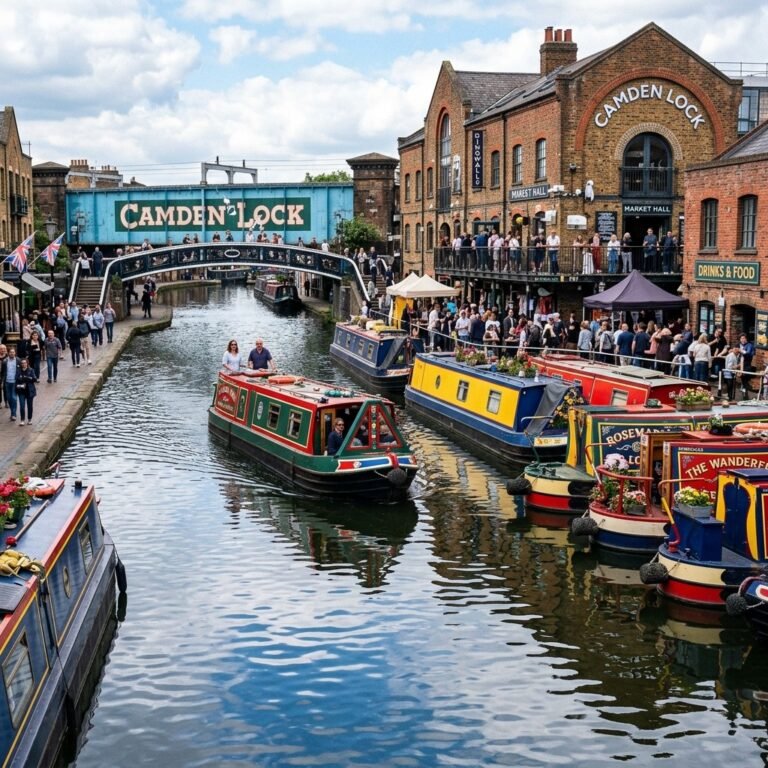
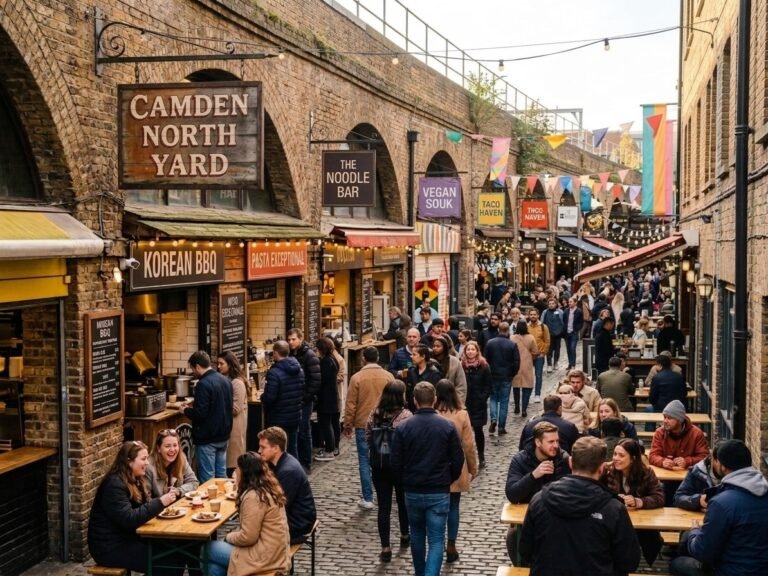
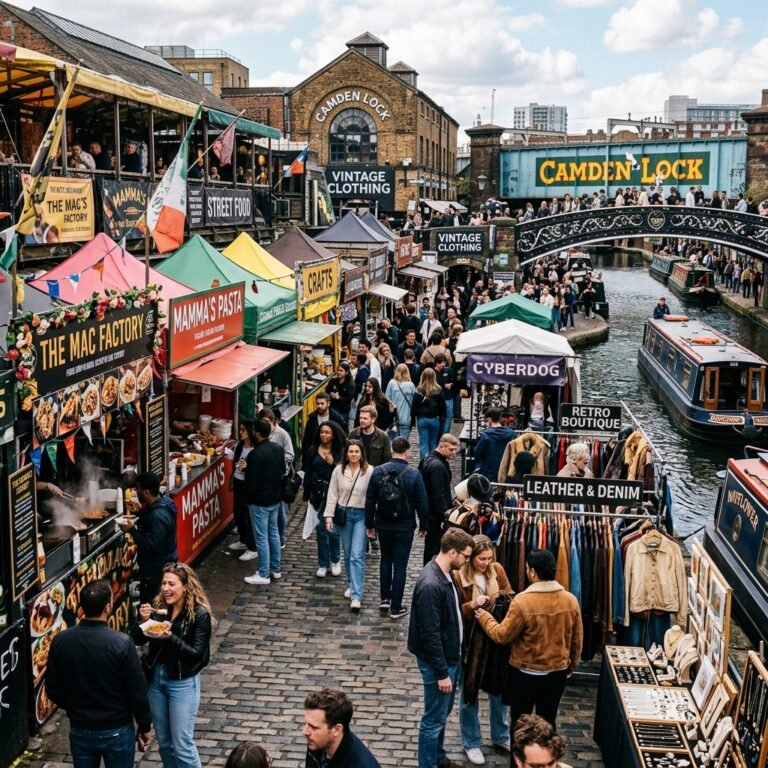
Camden Market draws roughly 250,000 visitors every week, making it the fourth-most popular tourist attraction in London (Wikipedia). But most visitors never make it past the canal-front stalls. Tucked inside the Stables Market, beyond the cobbled yards and railway arches, sits one of London’s best-kept secrets: the Horse Tunnel Market a series of vaulted Victorian brick tunnels that once housed hundreds of working horses, now repurposed as one of the UK’s most distinctive vintage markets.
What Is the Horse Tunnel Market?
The Horse Tunnel Market is a specific covered section of Camden’s Stables Market, located on Chalk Farm Road, NW1. It occupies the original Victorian horse tunnels beneath the railway infrastructure, distinct from the open yards of the wider Stables Market. It is not a standalone market it sits within, and is accessed through, the Stables Market complex.
Unlike the busier canal-facing sections of Camden Market, the Horse Tunnel Market has a very different atmosphere. The low brick-vaulted ceilings, dim lighting, and narrow passageways give it a raw, subterranean character that no other London market can replicate.
What you’ll find here differs from the general Stables Market too. This section is known for housing premium vintage traders the type of stock that commands higher prices because the quality is higher. Think carefully curated rails rather than bulk racks.
Key facts at a glance:
| Feature | Detail |
| Location | Inside Stables Market, Chalk Farm Road, NW1 |
| Setting | Victorian brick vaulted tunnels |
| Speciality | Premium vintage & alternative fashion |
| Nearest tube | Chalk Farm (Northern line, ~5 min walk) |
| Opening days | Weekends (some traders open weekdays) |
| Historic designation | Grade II listed structure |
What Is the History of the Camden Horse Tunnels?
The Camden horse tunnels were built between 1854 and 1856 as part of a major remodelling of the Camden Town Goods Yard following the construction of the North London Railway. Originally stabling 148 horses across four blocks, the tunnels allowed working horses to move freight between Regent’s Canal and the rail yards without crossing active tracks.
The story begins in 1846, when an Act of Parliament permitted the construction of an eight-mile goods railway from the West India Docks at Blackwall to Camden Town. By December 1850 the line had reached Camden Town, and a passenger service followed almost by accident it proved so popular that it transformed into a full suburban route.
When the North London Railway line was moved northward in 1854 (closer to the Roundhouse), it left a triangular space between the line and Chalk Farm Road. This space was used to redesign the Camden Goods Yard, and as part of that redesign, the stables were built four blocks, 1½ storeys high, with distinctive semicircular windows. At that time, they stabled 148 horses (according to Local Local History’s detailed survey of Camden Town).
The role of Pickfords cannot be overstated. Pickfords whose history dates to 1646 and who had been routing traffic via the canal system since 1780 operated a substantial horse-powered distribution network across Camden. The Stables Market today sits on the historic former Pickfords stables and includes the Grade II listed horse hospital (Historic England listing: 1258100) that served the horses pulling Pickford’s distribution vans and barges along the Regent’s Canal.
Below street level, the horse tunnels extended further than most visitors ever see. Horses moved through these passages beneath the Euston mainline, the Primrose Hill goods depot, Gilbeys Bonded Warehouse, and under what is now Camden Lock Market. The cast-iron grilles still visible in the road surface today set at regular intervals along Chalk Farm Road were the original sole source of daylight for the horses working underground.
Large sections of the tunnel network were demolished during the 1980s and 1990s redevelopment of the area, which is why many of the tunnels that remain appear to lead to nowhere.
| Year | Event |
| 1646 | Pickfords established (earliest public records) |
| 1780 | Pickfords begins routing freight via canal system |
| 1850–51 | North London Railway reaches Camden Town |
| 1854–56 | Horse stables built; originally housing 148 horses |
| 1974 | Camden Market founded as a craft market near Camden Lock |
| 1980s–90s | Large sections of tunnels demolished during redevelopment |
| 2014 | Stables Market sold for $685 million to Market Tech PLC |
What Are the Best Shops in the Horse Tunnel Market?
The Horse Tunnel Market is Camden’s premier destination for high-quality vintage clothing and alternative fashion. It houses a small but carefully curated group of traders whose stock is generally a step above what you’ll find in the wider Stables Market yards particularly for designer and heritage vintage pieces.
The standout trader is Camden Vintage, located at units D10–D12 in the Horse Tunnels. Camden Vintage specialises in premium pre-owned heritage clothing expect to find:
- Burberry trench coats and check pieces
- Barbour waxed jackets
- Original Ray-Ban sunglasses
- Hermès scarves
- British heritage labels and deadstock pieces
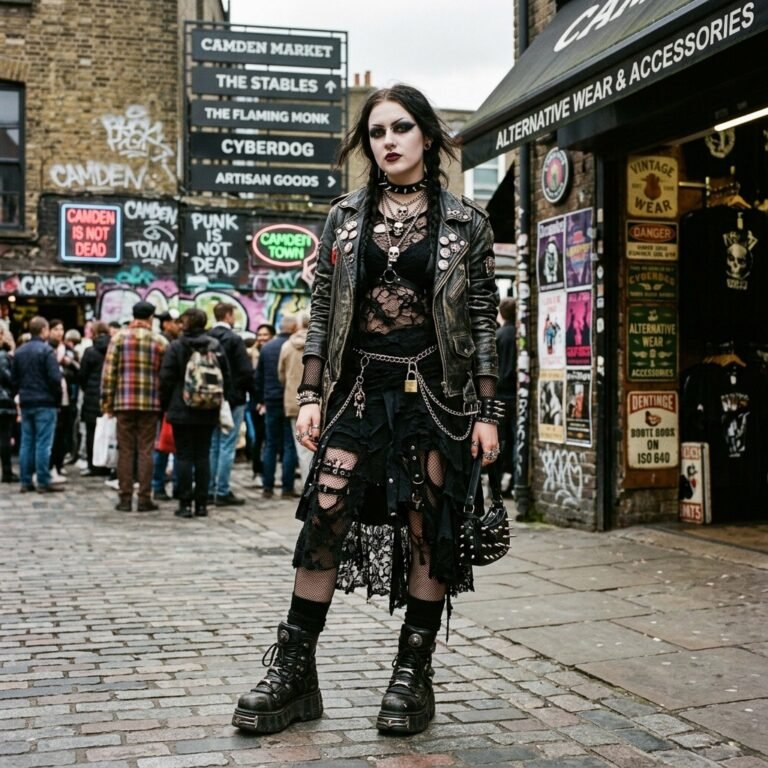
Beyond Camden Vintage, the tunnel section also houses alternative fashion traders selling items aimed at goth, punk, and cyberpunk aesthetics Camden’s long-established subculture scene is well represented here.
What makes the Horse Tunnel Market different from the general Stables Market?
| Horse Tunnel Market | General Stables Market | |
| Stock type | Premium vintage, heritage labels | Broader range, budget–mid range |
| Atmosphere | Dark, vaulted, intimate | Open yards, busier, louder |
| Crowd | Serious vintage buyers | General tourists and browsers |
| Price point | Higher (quality reflects it) | Wide range |
Are the Horse Tunnels the Same as the Camden Catacombs?
No. The Horse Tunnel Market and the Camden Catacombs are not the same thing. The Horse Tunnel Market refers to the accessible, repurposed section of Victorian stabling tunnels that now functions as a market. The Camden Catacombs is the name given to the much wider, largely inaccessible network of underground tunnels, vaults, and passages that runs beneath the broader Camden area.
This is one of the most consistent points of confusion in online content about Camden and it matters for anyone planning a visit.
The Camden Catacombs (as documented by Subterranea Britannica) extend beneath the Euston mainline, Primrose Hill goods depot, Gilbeys Bonded Warehouse on Regent’s Canal, and Camden Lock Market. They were once owned by British Railways and have passed into multiple private ownership. Camden Market actively discourages access to the non-market portions.
At a glance:
| Horse Tunnel Market | Camden Catacombs | |
| Access | Open to public (market hours) | Restricted; largely inaccessible |
| Use | Active retail market | Storage, utilities, disused |
| Status | Part of Stables Market | Separate network beneath Camden |
| Atmosphere | Atmospheric but accessible | Not publicly accessible |
Some urban exploration groups have accessed parts of the broader catacomb network via Regent’s Canal by inflatable boat but this is not sanctioned and is not advised.
How Do You Get to the Horse Tunnel Market?
The Horse Tunnel Market is accessed through the Stables Market via the Chalk Farm Road entrance in Camden Town, NW1. The closest tube station is Chalk Farm on the Northern line, approximately a five-minute walk. Once inside the Stables Market, follow signage marked “Horse Tunnels” through the cobbled yards toward the covered tunnel entrance.
Step-by-step from Chalk Farm tube:
- Exit Chalk Farm station and turn right onto Chalk Farm Road heading south
- The Stables Market entrance is on your left within five minutes
- Enter through the Chalk Farm Road gate
- Walk through the cobbled outer yards, passing the railway arch stalls
- Look for “Horse Tunnels” signage they are toward the rear/covered section
- The tunnel entrance is marked by the transition from open arches to vaulted brick ceilings
Practical info:
- Parking: Limited recommend arriving by tube or bus
- Accessibility: Cobbled throughout; not wheelchair-friendly
- Opening days: Weekends are the main trading days; some traders open Thursday–Friday
- Best arrival time: Late morning (10–11am) on weekdays for quieter browsing
What Makes Camden Market So Popular?
Camden Market’s popularity stems from its unique combination of alternative culture, historic Victorian architecture, independent traders, and weekend street food scene. Drawing approximately 250,000 visitors per week, it thrives on an identity built around individuality chain stores are banned from the Stables Market, and no two stalls are the same.
Camden Market first opened as a small craft market on 30 March 1974. Its growth was partly built on Sundays historically, before the Sunday Trading Act 1994, shops were not permitted to open on Sundays. Camden’s market status allowed it to trade freely, drawing enormous crowds that never left.
The result is a 6.5-hectare (16-acre) patchwork of 1,000+ stalls, bars, shops, and cafes spanning six distinct market areas. The Stables Market home to the horse tunnels is the most distinctive of them, housed in genuine Victorian infrastructure and Grade II listed heritage buildings.
How to Photograph the Horse Tunnels
The Horse Tunnel Market is one of the most photogenic locations in all of Camden, offering Victorian brick-vaulted ceilings, warm artificial lighting, and narrow corridor compositions that reward a patient photographer. Low-light capability is essential the tunnel interiors are significantly darker than the open market areas.
Photography tips:
- Camera settings: Use a wide aperture (f/1.8–f/2.8) and raise ISO to 1600–3200. A camera with solid low-light performance will significantly outperform a standard smartphone.
- Best time to visit: Weekday mornings (Thursday or Friday, 10–11am) offer quieter tunnels with fewer people in frame.
- Compositions to look for: The repeating brick arches create natural leading lines. Shoot toward the end of a corridor for depth.
- Stall lighting: Individual traders often use warm tungsten bulbs that add golden tones use this to your advantage rather than correcting it in post.
- Permission: Always ask traders before photographing their stock close-up.
Frequently Asked Questions
Where exactly is the Horse Tunnel Market in Camden?
The Horse Tunnel Market is inside the Stables Market, accessed via the Chalk Farm Road entrance in Camden Town, NW1. It is not a separate market it is a specific covered section within the Stables Market complex, signposted internally as “Horse Tunnels.”
Are the Camden horse tunnels the same as the Camden Catacombs?
No. The Horse Tunnel Market is the accessible, retail-facing section of Victorian stabling tunnels. The Camden Catacombs is a broader, mostly inaccessible network of underground passages beneath the wider Camden area. Most of the catacombs are off-limits to the public.
When were the Camden horse tunnels built?
The stables were built between 1854 and 1856 as part of the remodelling of Camden Town Goods Yard following the construction of the North London Railway. They originally housed 148 horses across four blocks (Local Local History).
How many horses were originally kept in the Camden tunnels?
Historical records from the 1854–56 construction period document 148 horses stabled in four blocks. The tunnels formed part of the broader Pickfords horse-powered distribution operation along Regent’s Canal and the railway freight network.
Are the horse tunnels wheelchair accessible?
No. The Horse Tunnel Market is cobbled throughout and uneven in places. The tunnel entrances and interiors present significant challenges for wheelchair users. Camden Market does not currently list the Horse Tunnels as accessible.
What shops are in the Horse Tunnel Market?
The Horse Tunnel Market houses premium vintage clothing traders. Camden Vintage (units D10–D12) is the best-known, specialising in heritage labels including Burberry, Barbour, Ray-Ban, and Hermès. The section also includes alternative fashion stalls catering to goth and punk subcultures.
What day is the Horse Tunnel Market open?
The main trading days are Saturday and Sunday. Some permanent traders open Thursday and Friday. Weekdays outside of this are inconsistent weekend visits are recommended for the fullest experience.
Why are there metal grilles in the road near the Stables Market?
The cast-iron grilles set into the road surface along Chalk Farm Road are original Victorian ventilation points. They were the only source of natural light for the horses working in the tunnels below street level in the 19th century.
Is the Horse Tunnel Market Grade II listed?
The site is Grade II listed by Historic England, specifically the horse hospital with ramps and boundary wall (listing reference: 1258100). The listing recognises the outstanding historic significance of the Victorian railway stable infrastructure.
What is the closest tube station to the Horse Tunnel Market?
Chalk Farm station on the Northern line is the closest, approximately five minutes on foot from the Stables Market entrance on Chalk Farm Road. Camden Town station is also walkable (around 10–12 minutes) and offers more frequent services.